
Easiest Microgreens to Grow: 5 Beginner Picks
The 5 Easiest Microgreens to Grow for First Time Growers
Ten days that's how long it took my first tray of radish microgreens to go from scattered seed to a two inch mat of peppery, hot pink stems I snipped straight onto a sandwich.
No greenhouse, no farm plot just a windowsill and a rinsed out plastic tray from the recycling bin.
If you're a first time grower who's killed a houseplant or two you just want something homegrown to show for it this week. The easiest microgreens to grow aren't the trendy chef garnish varieties everyone lists first.
Here's exactly which five to start with and why most beginner lists miss two of the most forgiving picks.
Radish, broccoli, sunflower, pea shoots and arugula are the easiest microgreens to grow for a first attempt. All five germinate within a day or two, tolerate mild neglect and reach harvest in 5 to 14 days using nothing more than a shallow tray, potting mix and a bright windowsill.
Below, you'll see how each of these five stacks up on speed and difficulty the two habits that ruin most first trays and a simple way to pick your starting variety without overthinking it.
What Makes a Great Beginner Microgreen
Three things separate a forgiving microgreen from a fussy one: germination speed, watering tolerance and mold resistance in the humid first days under cover.
Fast seeds give less time for a watering mistake to matter before roots take hold. Commercial growers lean on the same pattern.
When GroCycle's founder picked his four favorite microgreens to grow for profit, three of them, radish, sunflower and pea shoots were the same fast, forgiving varieties beginners are told to start with (GroCycle, 2019).
Nutrient density backs up the effort too.

A 2012 University of Maryland and USDA study measured vitamin and carotenoid levels across 25 commercially available microgreens and found they carried four to 40 times more nutrients than their mature counterparts (University of Maryland Department of Nutrition and Food Science, 2012).
"Some of the numbers were really, really high" said Zhenlei Xiao, graduate researcher at the University of Maryland (University of Maryland Department of Nutrition and Food Science, 2012).
Speed matters most. Fast germination, watering tolerance and mold resistance make radish, broccoli, sunflower, pea shoots and arugula the best microgreens for first time growers, well before flavor even enters the conversation.
The 5 Easiest Microgreens to Grow: Ranked
Ranked from fastest to most forgiving here's where to start.
1. Radish: Fastest From Seed to Snip

Radish is the microgreen version of a quick win. Seeds germinate in a day or two and the tray is ready in as little as 5 to 7 days with a bold, peppery bite close to a full grown radish root (Eartheasy, 2023).
It also shrugs off cooler rooms and resists mold better than most other seeds that makes it the safest first choice if your house runs cold in winter.
2. Broccoli: The Forgiving Everyday Green

Broccoli microgreens take a bit longer, 7 to 14 days but reward the wait. The flavor is mild and faintly cabbage like so it works in almost anything you're already cooking (Eartheasy, 2023).
One habit is worth building early: water broccoli trays from below not on top. Standing water on the leaves invites bacteria right at the base of the stems.
3. Sunflower: The Substantial, Crunchy Pick
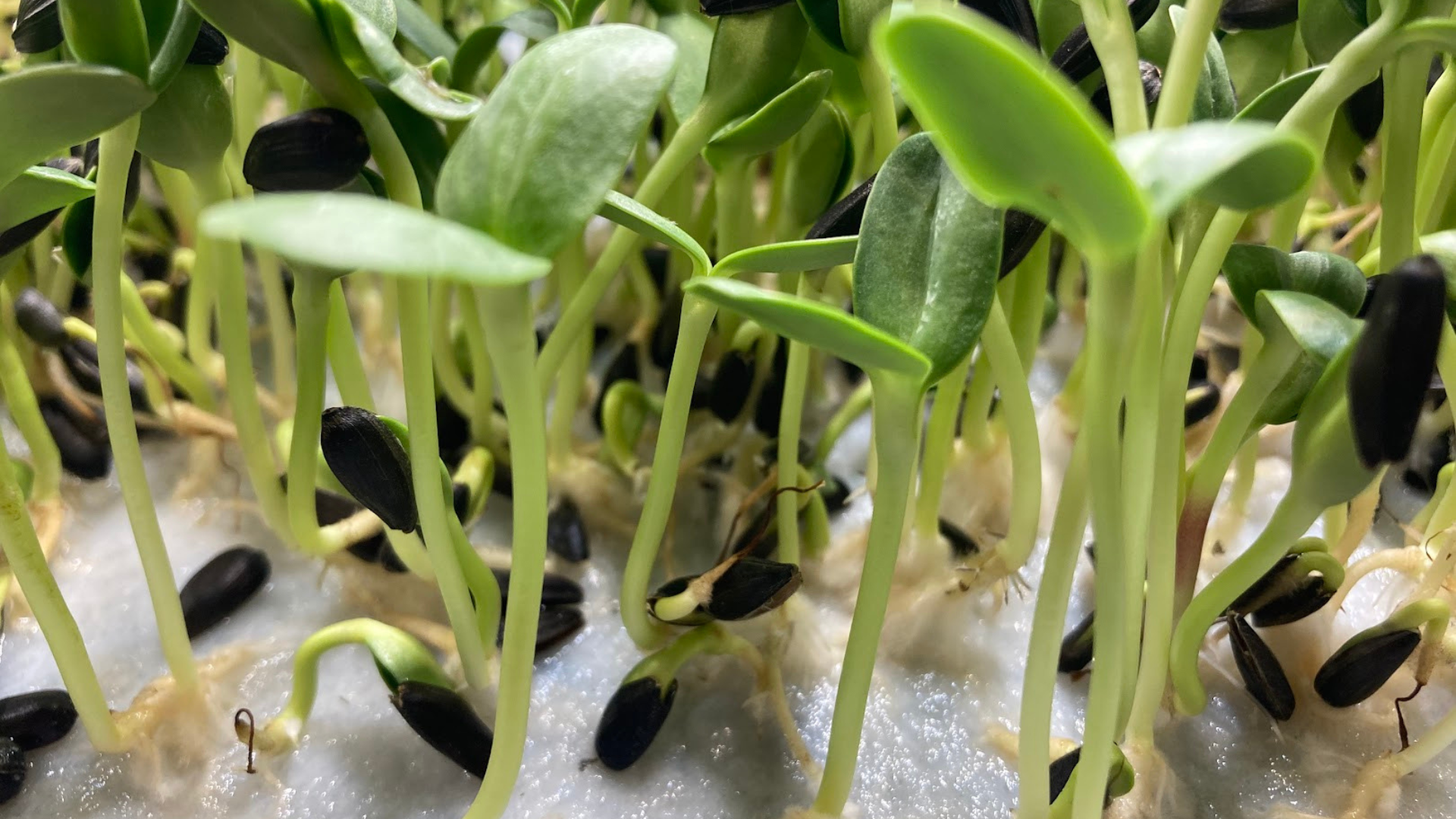
Sunflower shoots come from black oil sunflower seeds, the same kind sold as birdseed so buy a food grade bag. They take 7 to 14 days to mature into a thick, nutty flavored shoot (Eartheasy, 2023).
Ensure proper spacing when you sow the seeds so the stems don't turn mushy as they push up. Crowded sunflower trays are the most common beginner mistake with this variety.
4. Pea Shoots: The Only One That Regrows

Pea shoots take 10 to 14 days for a first cut. They're the rare microgreen that can regrow for a second or even third harvest if you leave the lowest set of leaves in place (RusticWise, 2025).
The flavor is sweet and green, closer to snap peas than anything spicy that makes it an easy sell to picky eaters or kids.
5. Arugula: The Fastest Full Flavor
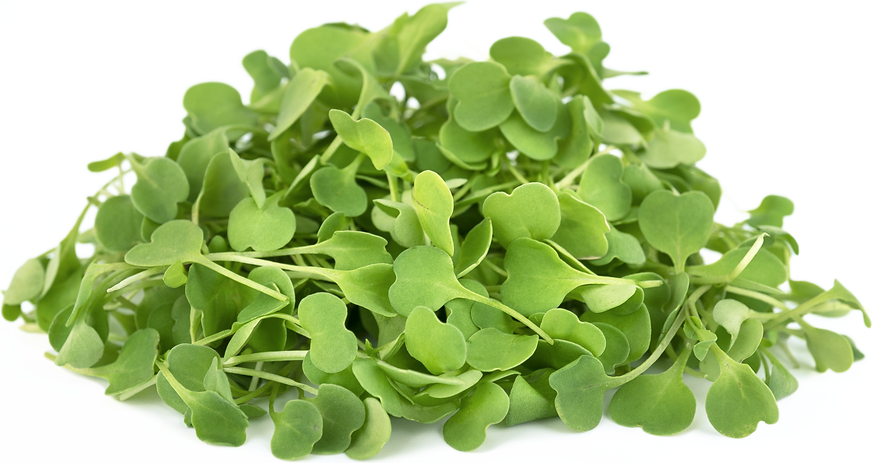
Arugula is done in as little as 5 to 10 days and brings real peppery heat without any soaking or special watering routine. Sow it thickly, cover it in darkness for the first two or three days then move it into bright light once the seed coats start lifting.
Fast. Spicy. Almost impossible to get wrong.
Days to harvest, flavor and best use by variety

| Microgreen | Days to Harvest | Flavor | Best For |
|---|---|---|---|
| Radish | 5–7 days | Bold, peppery | First timers, cool rooms |
| Broccoli | 7–14 days | Mild, cabbag like | Everyday cooking, kids |
| Sunflower | 7–14 days | Nutty, crunchy | Heartiest bite |
| Pea shoots | 10–14 days | Sweet, green | Multiple harvests |
| Arugula | 5–10 days | Peppery, bold | Fastest full flavor |
💡 Pro Tip: Label every tray with its sow date the moment you plant it with five different harvest windows running at once that's the only way to remember which tray is actually ready.
What to Watch Out For
The single biggest killer of a first tray is watering from the top. Standing water on young stems invites the mold and damping off that can wipe out an entire batch overnight.
The second mistake is starting five trays at once. Different seeds want different light, soak times, and cover schedules and juggling all of it in week one turns good intentions into five mushy trays instead of one solid harvest.
📝 Note: Sunflower and pea shoots need deeper soil contact than radish or arugula. Don't spread one thin layer of leftover potting mix across all five trays and expect even results.
How to Make Your Final Choice
Start with radish if you only try one tray this week. Of all the easy microgreens to grow at home it's the one most likely to succeed on a first try.
Once you've got a harvest behind you, look at what experienced growers do at scale.
Curtis Stone built Green City Acres on small urban lots in Kelowna, BC and has documented grossing $80,000 from a single quarter acre using the same short-cycle crops beginners start with (The Urban Farmer, 2016).
Growing your own also beats the price tag at the store. A small clamshell of microgreens typically runs $5 to $10 at farmers' markets while a full first batch of seed and starting mix costs around $25 and covers several trays (Gardenary, 2022).
Whichever one you start with, all five count as beginner-friendly microgreens varieties worth keeping in rotation and all five belong on any solid list of microgreens for beginners.
Track your own seed and soil spend against what you'd pay at the store. One tray tells you everything you need to know. Start there.
Key Takeaways
- Radish, broccoli, sunflower, pea shoots and arugula are the five most forgiving microgreens for a first attempt all ready in 5 to 14 days.
- Radish is the fastest and safest starting point; sunflower needs even spacing to avoid mushy stems.
- Pea shoots are the only variety on this list likely to regrow for a second harvest.
- Watering from the top not lack of light, kills more first trays than anything else.
- Growing your own typically costs far less than the $5 to $10 farmers' market price per small tray.
Pick one tray of the easiest microgreens to grow not five and in under two weeks you'll have a windowsill habit instead of a pile of good intentions.
Frequently Asked Questions
What is the easiest microgreen to grow for a first attempt?
Radish is generally the easiest, since it germinates in a day or two, tolerates cooler rooms and resists mold better than most other seeds it reaches harvest in as little as 5 to 7 days.
Is it cheaper to grow microgreens than buy them?
Yes. Store bought trays typically run $5 to $10 for a small package while a first batch grown at home from seed and starting mix costs around $25 total and covers several trays.
Do microgreens regrow after cutting?
Most varieties, including radish, broccoli, sunflower and arugula do not regrow once cut since the seed's stored energy goes entirely into that first set of leaves. Pea shoots are the main exception and can often be cut two or three times.
What are the top 5 microgreens to grow as a beginner?
Radish, broccoli, sunflower, pea shoots and arugula cover the widest range of flavors and growing times while staying forgiving of beginner mistakes. Start with radish then branch out from there.
What is the most profitable microgreen to grow?
Sunflower, pea shoots and radish are commonly cited by commercial growers as reliable, high turnover crops since they combine a fast growing cycle with a strong yield per tray. That combination is also exactly why they're the easiest to recommend to home growers.


Comments
Post a Comment