
Mold or Root Hairs? How to Spot the Real Difference
Mold or Root Hairs? The Real Difference, Explained
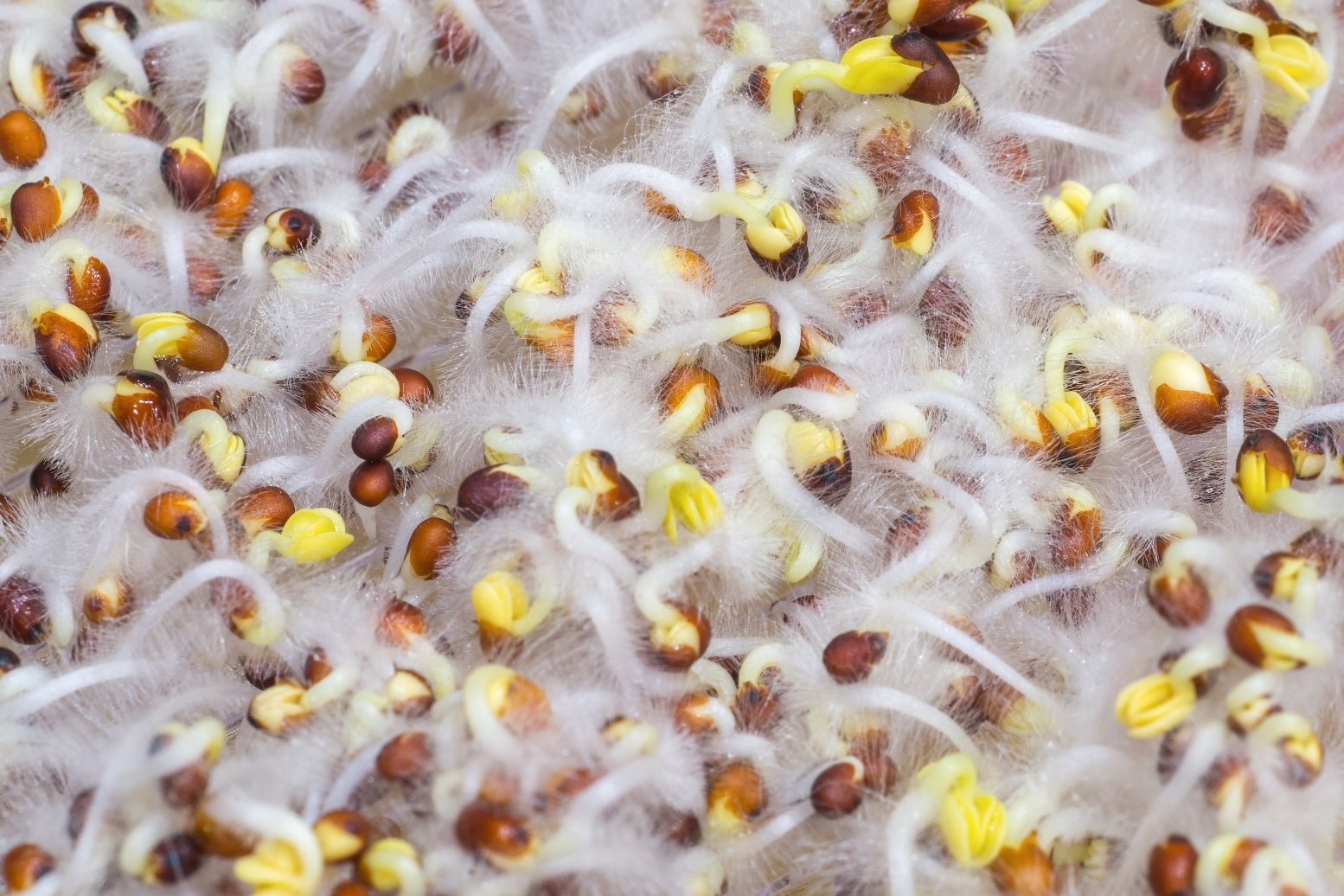
Two mornings after you soak a jar of seeds, something pale and fuzzy shows up on the surface. Your stomach drops.
If you're a home sprouter trying to decide whether tonight's jar is dinner or trash the call comes down to one detail most guides skip.
What the mold or root hairs question really needs is a water test not a photo comparison.
Get the call wrong in one direction and you dump a batch that was perfectly fine. Get it wrong in the other direction and you're eating something that can make you sick.
Here's the fast answer then the checks that back it up.
Root hairs are fine pale threads that grow only from the newly emerged root and disappear once the plant establishes.
Mold is fuzz that spreads across the seed coat or growing medium often with a musty smell or a slimy feel once wet. Location, smell and a 10 second water test tell them apart.
Below you'll see exactly where each one grows, what the water test looks like in practice and why eating the wrong one is a bigger gamble than most growers realize.
Why the Mold or Root Hairs Question Trips Up New Growers
Most new growers have never seen a root hair before and that's by design. In a garden bed, roots grow underground, out of sight so the fuzzy threads that appear right at germination stay hidden from view.
Penn State's Department of Plant Science calls root hairs microscopic structures that help the plant explore the soil. Structures you'd normally never see. Now visible.
Sprout jars and microgreen trays change that. Seeds germinate on top of the growing medium instead of buried inside it. The structure that's supposed to stay hidden ends up staring back at you under a grow light.
White fuzzy mold on seeds tends to show up during that same humid, dark stretch that's exactly when root hairs are also doing the most work.
Nothing is wrong by default. Your seed is just doing in full view something plants have always done in the dark that's the whole reason the mold or root hairs question exists in the first place.
Root Hairs vs Mold: Which One Is Actually in Your Tray?

Learning how to tell mold from root hairs comes down to six quick checks and none of them need a microscope.
Location is the fastest tell. Root hairs grow directly out of the radicle, the first root to emerge from the seed and stay attached to it.
Mold shows up anywhere it can find a foothold: the seed coat, the growing medium or the base of the stem. It can even reach leaves that got splashed during watering.
Color matters next. Root hairs stay white to translucent. Mold on sprouts often starts white too, but it usually shifts toward gray, pink or black as it matures.
Texture is where your fingers settle the argument. Root hairs feel soft and dry almost like fine down. Mold feels slimy, sticky or powdery.
Smell rarely lies. Root hairs have no odor at all. Mold once established gives off a musty, damp basement smell you'll notice before you even lift the lid.
Spread pattern tells you what's coming next. Root hairs stay evenly spaced along the root and don't jump from plant to plant. Mold spreads outward from a single point connecting one seed to the next.
The water test is the one almost nobody mentions. Mist the fuzz with clean water. Root hairs flatten or retract slightly as they absorb the moisture since that's their actual job. Mold doesn't retract. It just gets wetter.
Root hairs vs mold at a glance
| Attribute | Root Hairs | Mold |
|---|---|---|
| Location | Only on the emerging root (radicle) | Anywhere: seed coat, medium, stems, leaves |
| Color | White to translucent | Starts white, often shifts to gray, pink or black |
| Texture | Soft, dry, feathery | Slimy, sticky or powdery |
| Smell | None | Musty, damp odor |
| Spread pattern | Even, stays with the root | Uneven, jumps between seeds |
| Water test | Flattens or retracts slightly | Stays fuzzy, gets wetter |
💡 Pro Tip: Keep a small spray bottle next to your tray. A five second mist settles the mold or root hairs question faster than comparing photos online ever will.
The Risk Nobody Warns New Sprouters About
Getting this wrong isn't just about wasting a tray of greens. Sprouts are grown warm and wet the exact conditions bacteria need to multiply and that's true whether the fuzz on top turns out to be mold or nothing at all.
The U.S. Food and Drug Administration warns that sprouts served raw or lightly cooked can carry Salmonella, Listeria or E. coli. Home growing doesn't make them any safer than store bought sprouts.
Clemson University's Home & Garden Information Center goes further. One study found the microbe count on a single sprouting seed can climb past 1 billion within 2 to 3 days, moldy or not.
That number is the real stakes behind every mold or root hairs call not the tray in front of you but what's multiplying inside it. A batch that's genuinely moldy, slimy or off smelling should go straight in the compost no exceptions.
A batch of healthy root hairs that gets tossed out of caution isn't dangerous. Just wasted.
📝 Note: Children, older adults, pregnant women and anyone with a weakened immune system should skip raw sprouts entirely, mold or not even a clean batch can carry bacteria a healthy adult would shrug off.
How to Confirm It Without Tossing a Good Batch
Settling this takes under a minute once you know your starting point: where the fuzz first appeared and on what day of the grow cycle.
Start with location and the water test from the table above. If the fuzz is coming only from the root and it responds to a light mist you're almost certainly looking at root hairs if you're still unsure, smell the tray.
A clean, plant like smell means you're fine and a musty, damp basement smell means it's time to toss that section.
Prevention beats detective work every time. Jennifer Wilhelm of Fat Peach Farm in New Hampshire eliminated mold across a 36 tray cold storage grow room.
She sterilized trays with food grade hydrogen peroxide and white vinegar between harvests, ran three horizontal airflow fans and held humidity around 50 percent. The results come from her 2021 USDA funded farmer grant report.
In her own words: "We did not see mold forming anywhere inside the grow room." Zero mold.
Airflow and humidity control work the same way for mold on sprouts grown in a jar not just soil trays. "Maintaining stable humidity levels is crucial for minimizing pathogen risks in microgreens farming," says Jonah Krochmalnek, Founder and CEO, Microgreens Consulting (Vertical Farm Daily, 2024).
Sterilizing trays or jars with food grade hydrogen peroxide or white vinegar between batches stops most mold before it starts.
Keep humidity between 40 and 60 percent too. Do that consistently and you'll rarely have to ask the mold or root hairs question again.
Key Takeaways
- Root hairs grow only from the emerging root, stay white, feel dry and have no smell.
- Mold shows up anywhere in the tray, often shifts color and feels slimy or powdery with a musty smell.
- A quick water mist settles most doubts: root hairs flatten or retract, mold just gets wetter.
- Sprouting conditions favor bacteria regardless of what's on the surface so high risk eaters should stick to cooked sprouts.
- Good humidity and airflow control stops most mold before it starts, so the mold or root hairs question rarely comes up.
Next time you lift the lid and see fuzz you won't need a forum thread to settle it. Check where it's growing, mist it and trust what your nose tells you. The mold or root hairs call takes five seconds instead of a sleepless night.
Frequently Asked Questions
How can I tell if this is root hair or mold?
Settling the mold or root hairs question comes down to where it's growing and how it reacts to water. Root hairs grow only from the emerging root and flatten slightly when misted. Mold shows up anywhere in the tray and stays fuzzy no matter how wet it gets.
Is there mold that looks like hair?
Yes, cottony or cobweb style white fuzzy mold on seeds can look almost identical to root hairs at a glance especially in photos. The giveaway is location and smell: this type of mold spreads across the seed coat or medium and carries a musty odor root hairs lack.
How do you get rid of mold on sprouts or microgreens?
Remove the affected section right away and fix the airflow and humidity before reseeding. Sterilizing trays or jars with food grade hydrogen peroxide or white vinegar between batches stops most mold before it starts. Keep humidity between 40 and 60 percent too.
What happens when root hairs are damaged?
Damaged root hairs can't absorb water and nutrients as well which slows the plant down until it regrows them. This is part of why seedlings often wilt briefly after transplanting: the fragile hairs tear easily and need time to recover.
Do I need to throw out the whole tray if I find mold?
Not always. If the mold is contained to one small area and hasn't spread to nearby roots or stems, you can usually remove just that section. If the smell or slime has spread across the tray, toss the whole batch rather than risk it.


Comments
Post a Comment